I am a bit behind! I typed this up in the Lisbon airport as we were waiting to board our flight! We got to the airport 4 hours ahead of our flight because of previous experience, but went from taxi to boarding gate in 1:15 minutes!!
——–
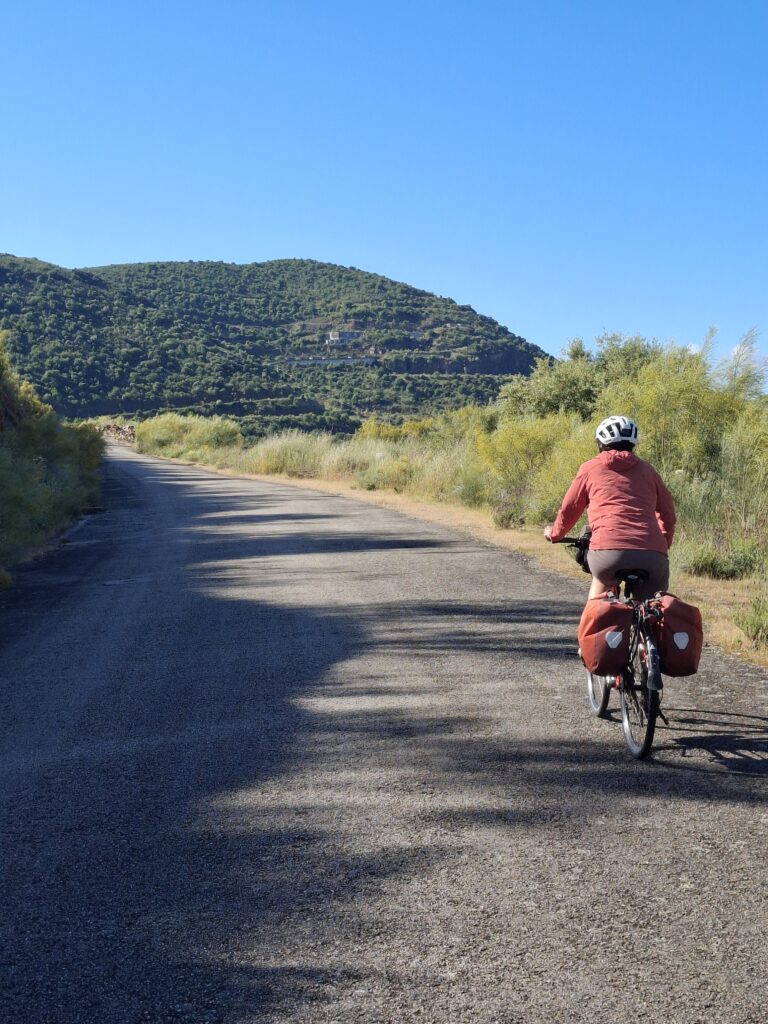
Luckily Adele was feeling strong enough to cycle today, so we packed up and headed out. We had a plan that followed a larger (still small) main road with a gentle grade. We left town on some quiet roads, a fantastic 300 meter downhill on beautiful pavement to cross the Coa river where we went upstream yesterday to visit the rock art.
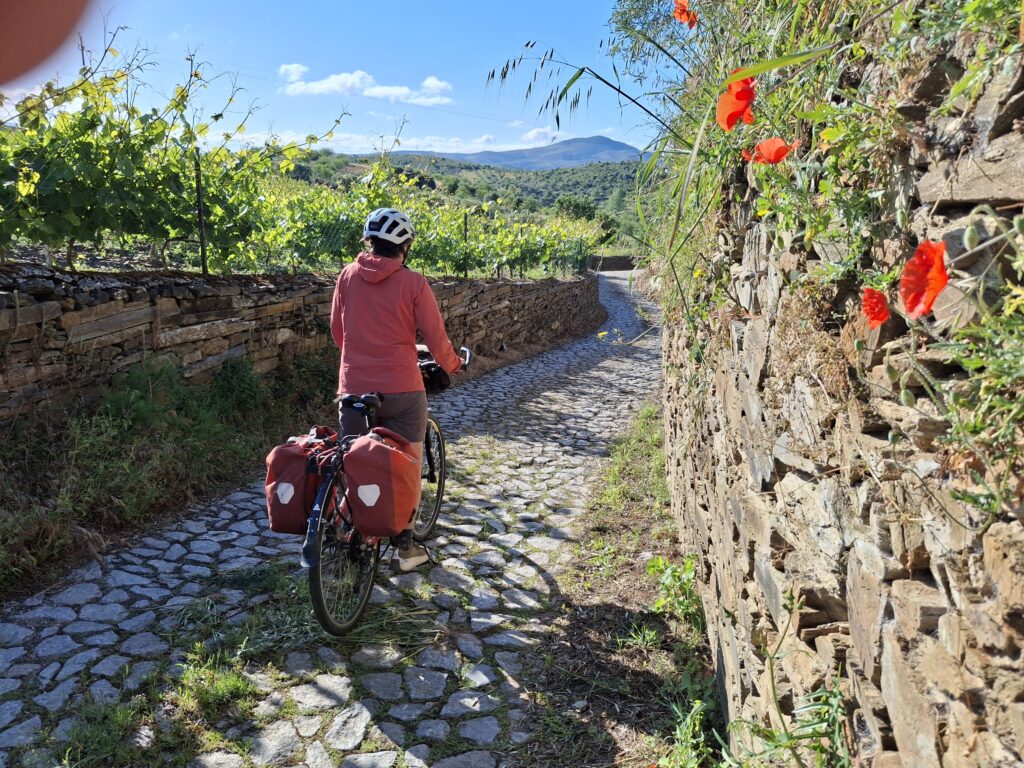
Across the river, there were some trails marked on the map that looked like they would be a “short cut”, or at least a very quiet way to climb back out of the river valley. It was paved, but as we climbed higher and higher, the road got steeper and degraded.
One of those “shortcuts” that really wasn’t shorter. But it was nice to be riding again!
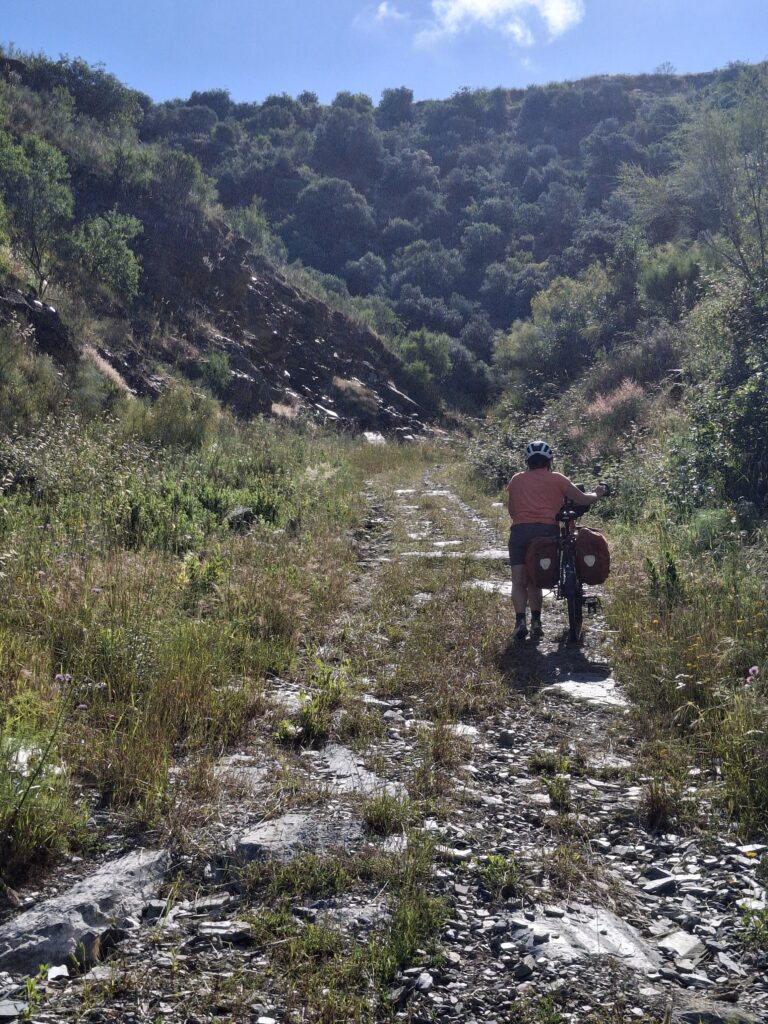
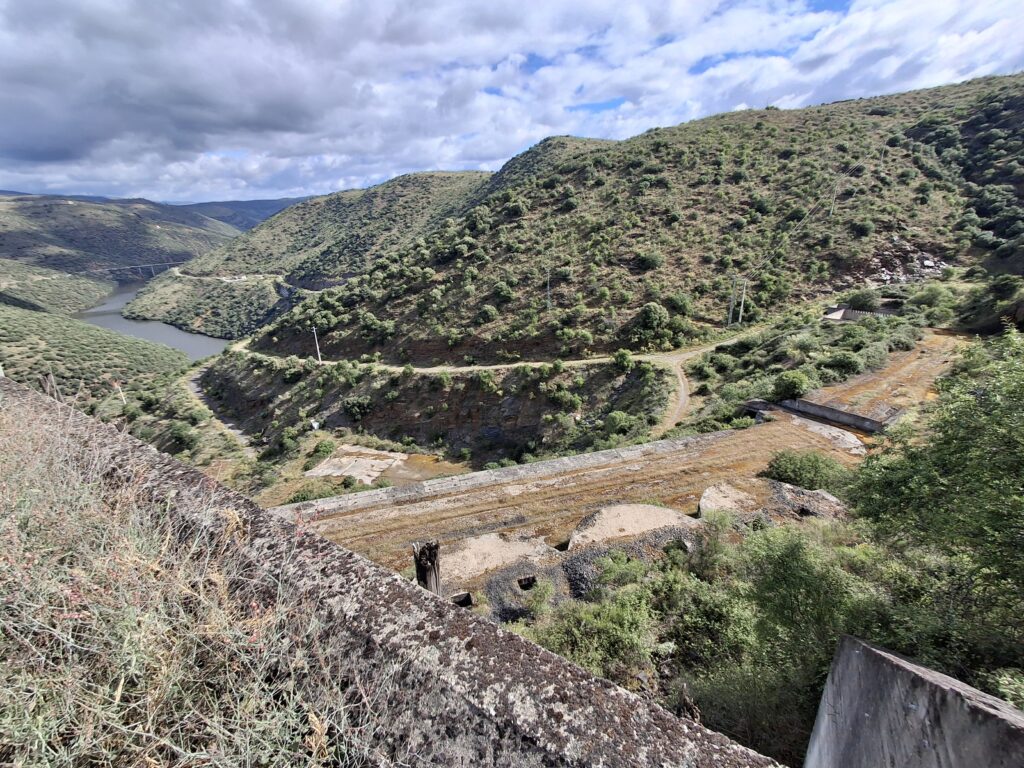
We climbed higher, above the remnants of the partially constructed dam, and had an amazing vista back down the valley we had just climbed.
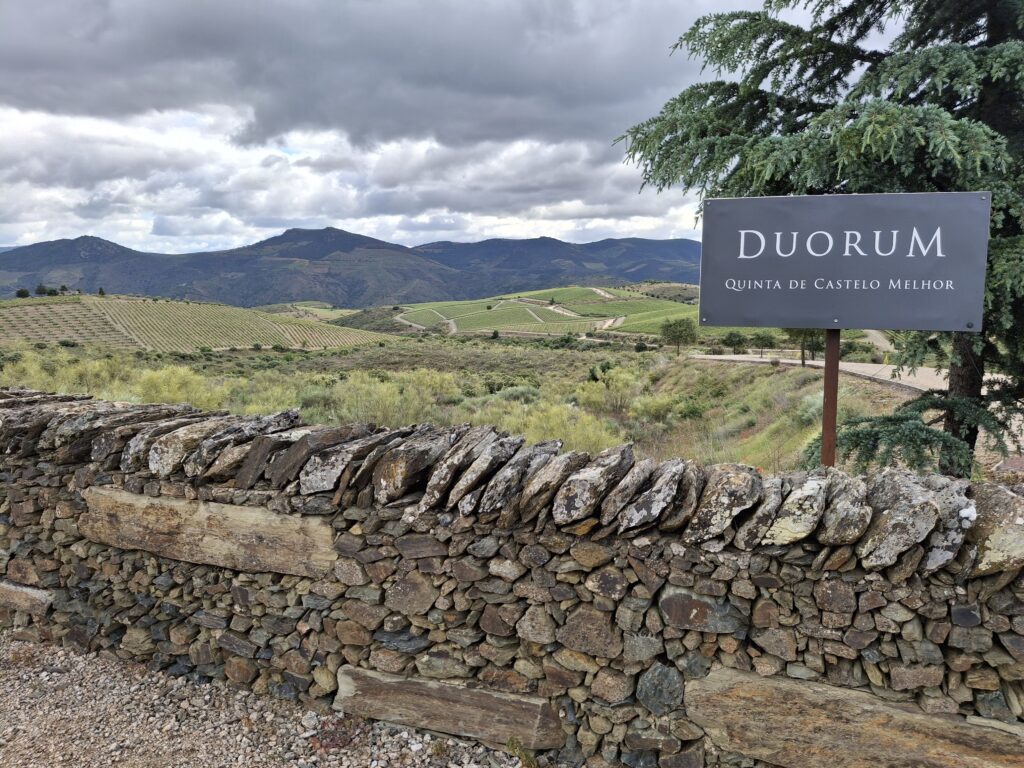
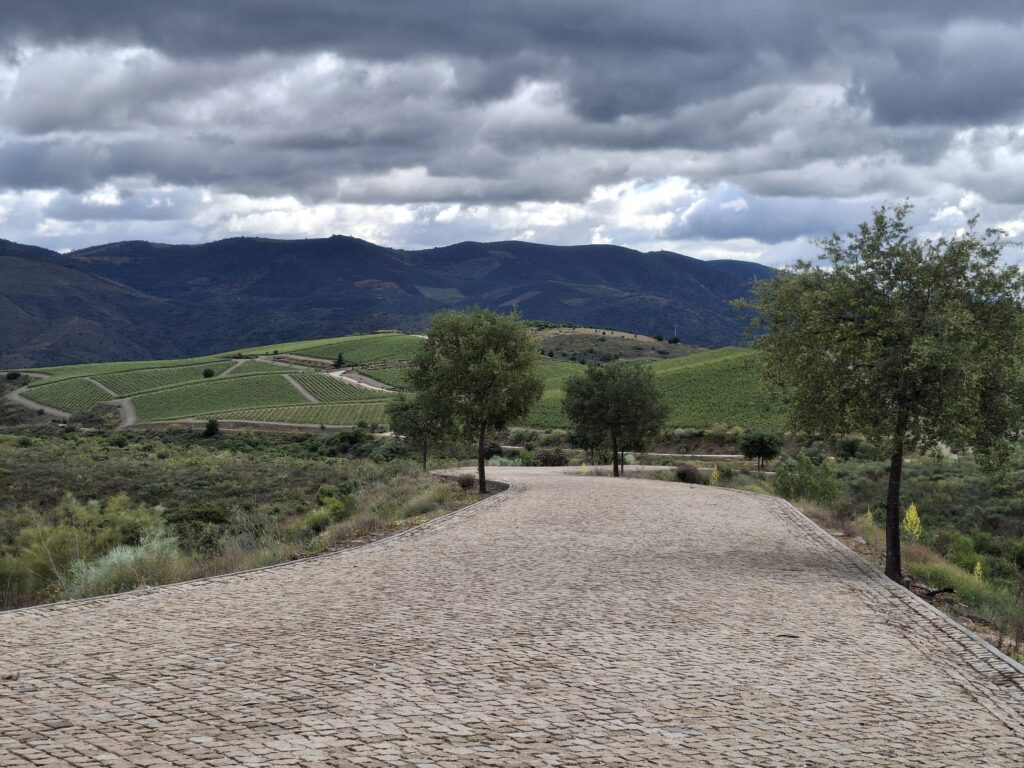
Once we got to the top, it opened up into large vineyards. As we head south, we will leave the official region of Portugal where Port Wine originates. Today will all be in the DOC, so any of the vineyards we say could be producing port wine as well as regular wines.
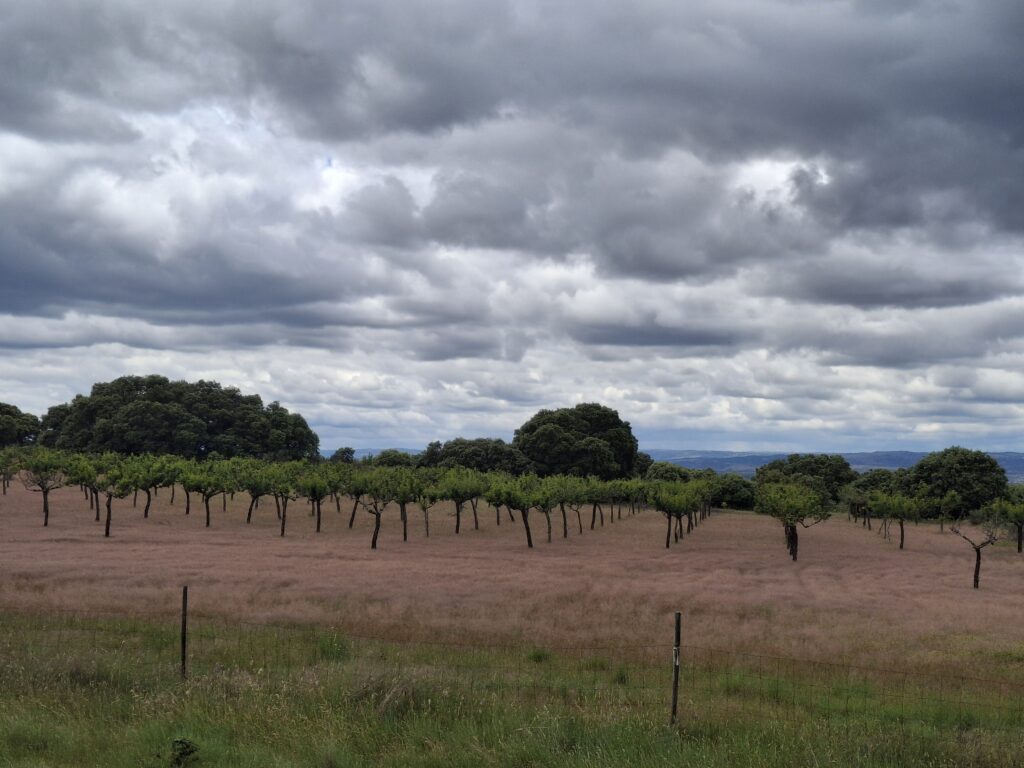
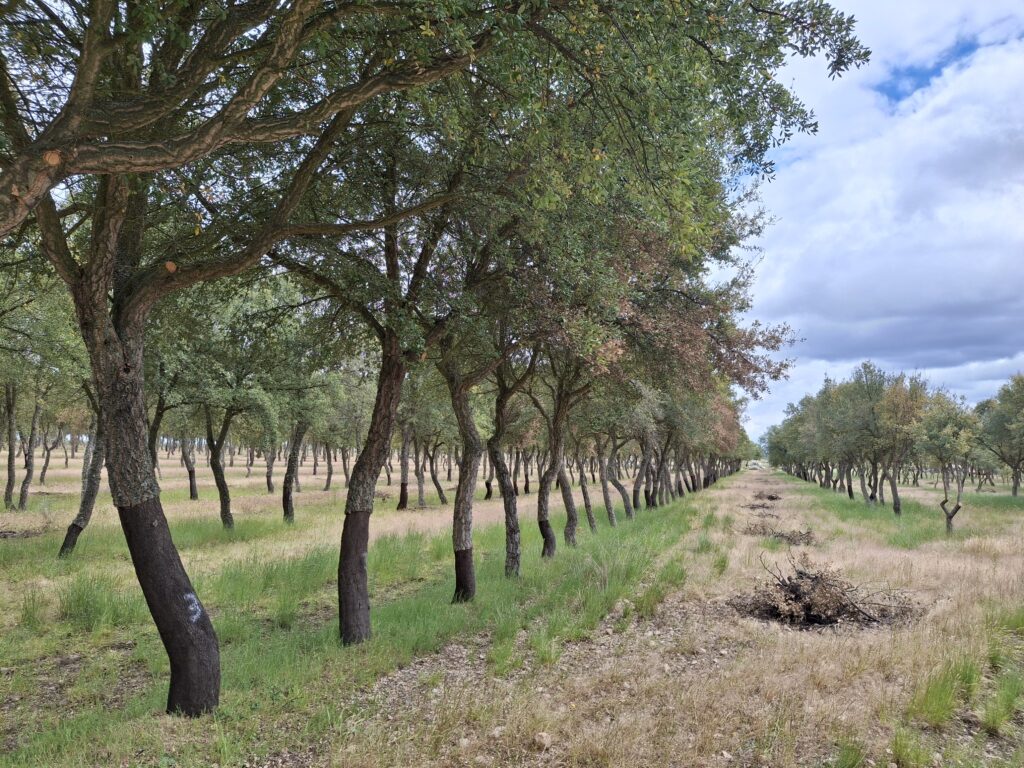
We also saw Almond and Pistachio trees along with the normal olive trees. A new addition was “orchards” of cork trees, with the bark harvested for wine corks! Interestingly, peeling the bark off the cork tree (presumably very carefully) doesn’t kill the tree. The bark grows back and they can get another harvest in 10+ years.
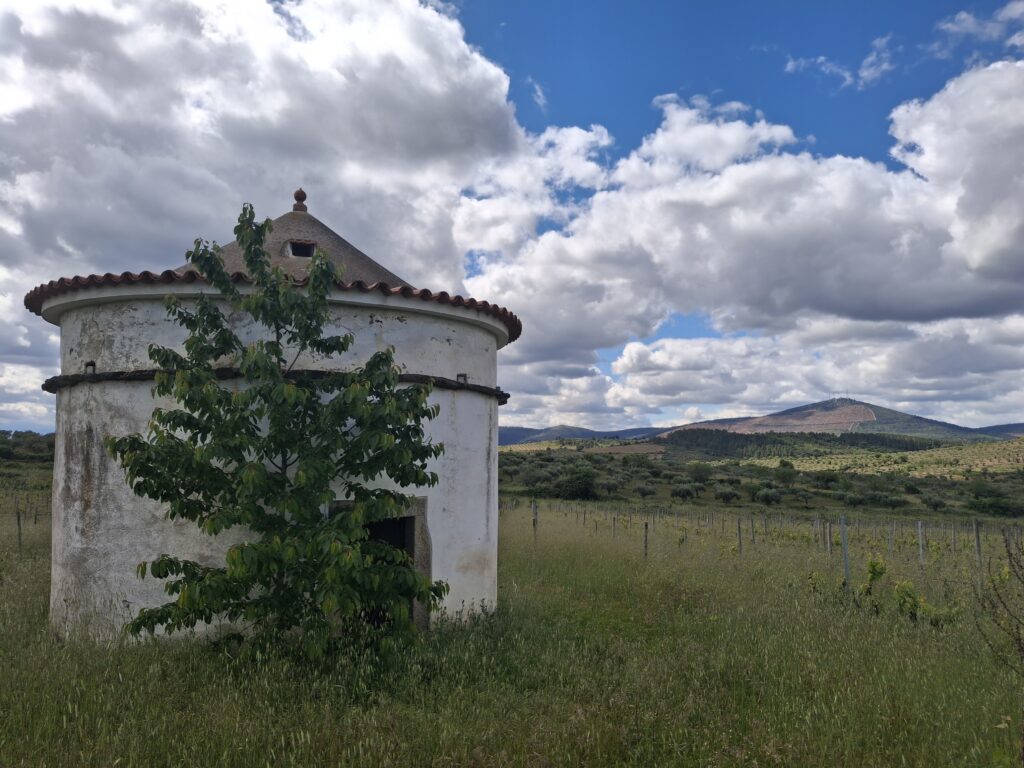
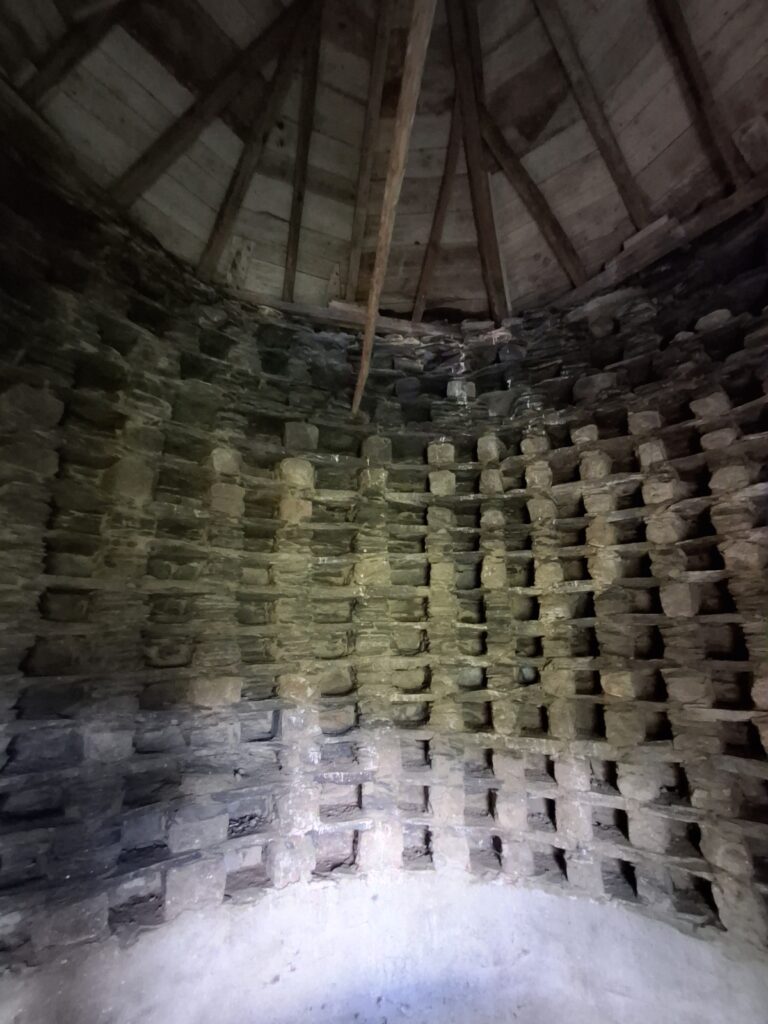
On our line art tour yesterday, we learned from our tour guide that the round houses dotted across the landscape are older buildings that housed pigeons! The pigeons could fly out and feed in the area and come back to their “home”. Periodically, they were dinner.
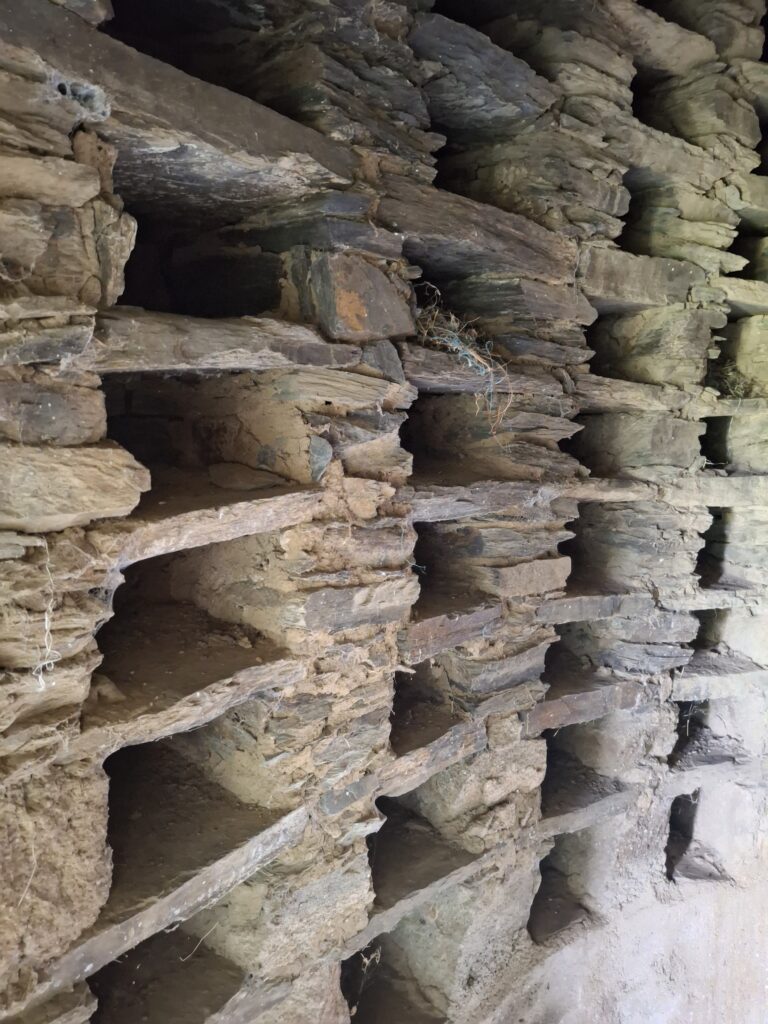
We cycled close to one of the abandoned pigeon houses and an investigation revealed another application of stone work! The pigeon cubby holes / nesting sites are floor to ceiling and form the structural basis of the walls, and are just stacked up rocks!
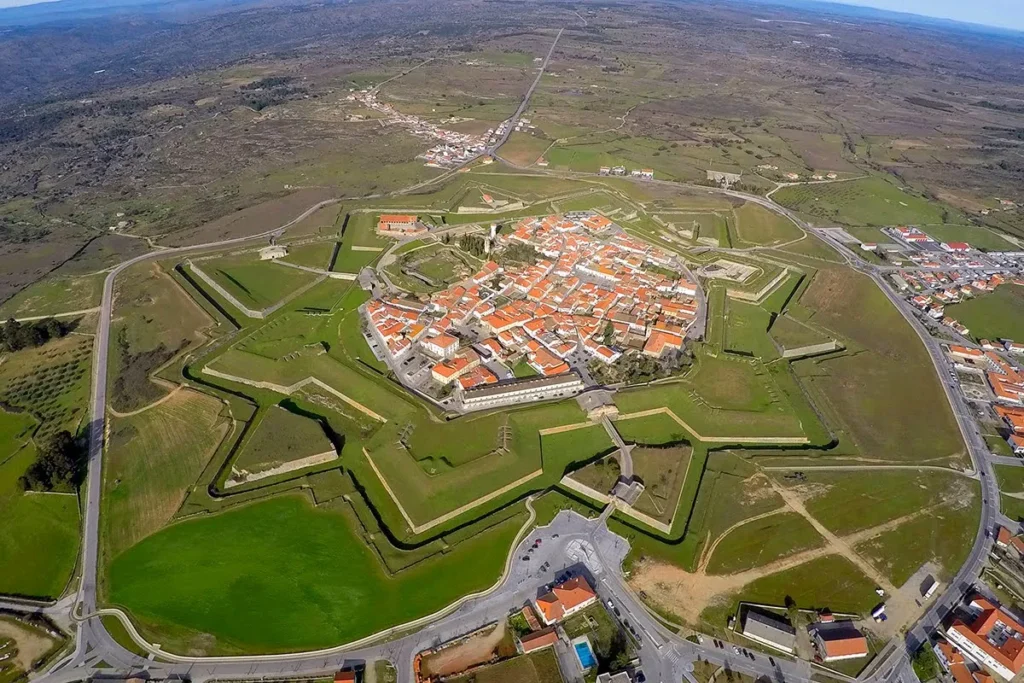
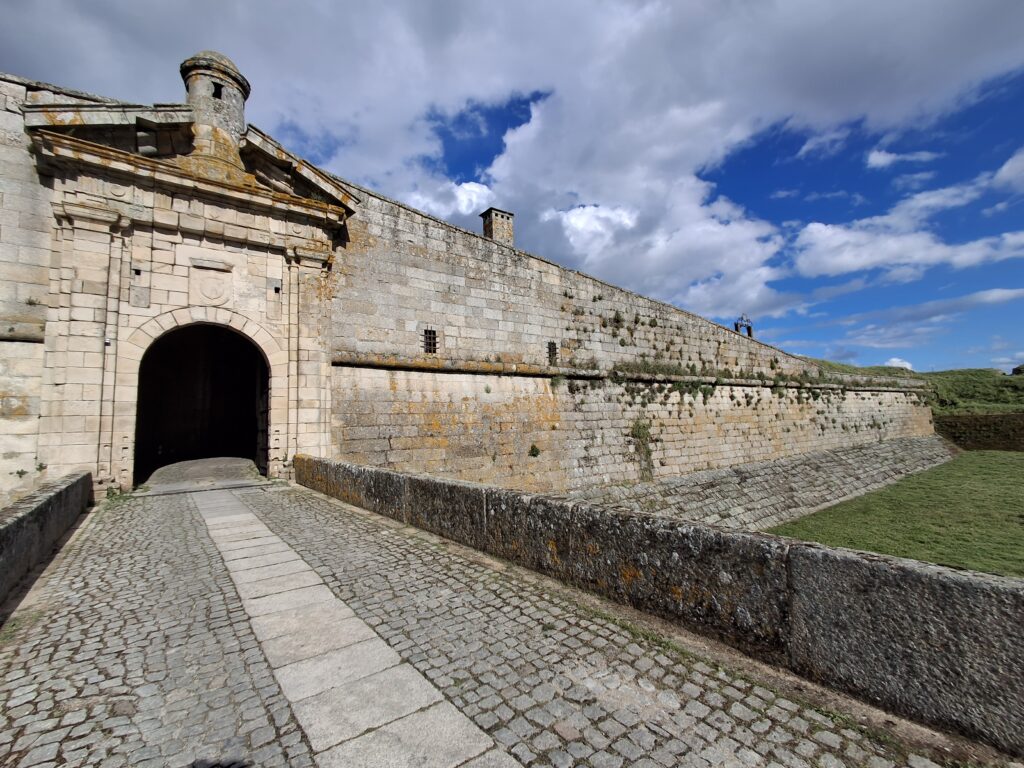
We cycled into the ancient fortified town of Almeda. It has a long history and is an amazing work of engineering! This photo was from the Internet, it’s not mine!
When we checked into our accommodation, we were overjoyed to find the following layout in our bathroom 🙂
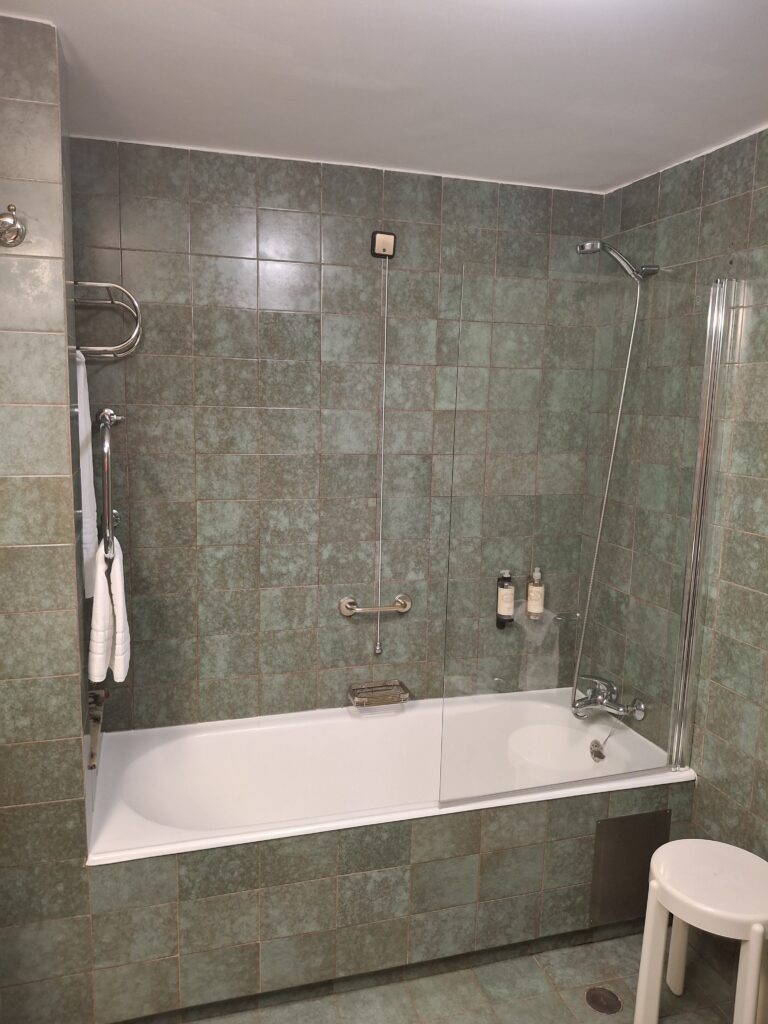
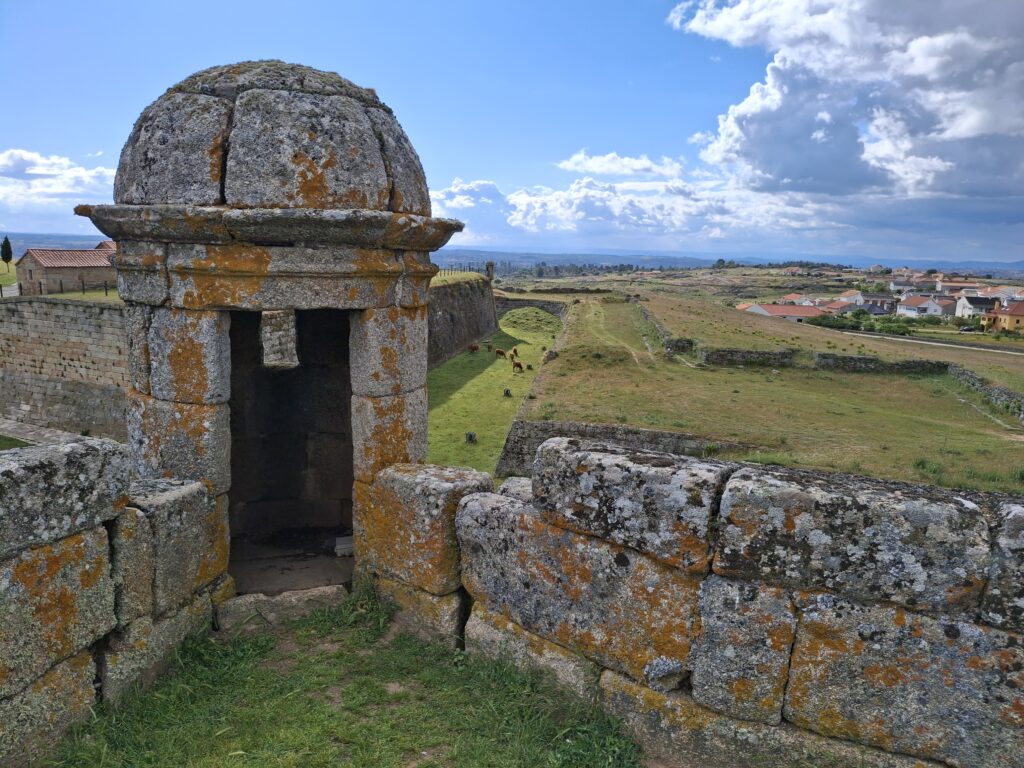
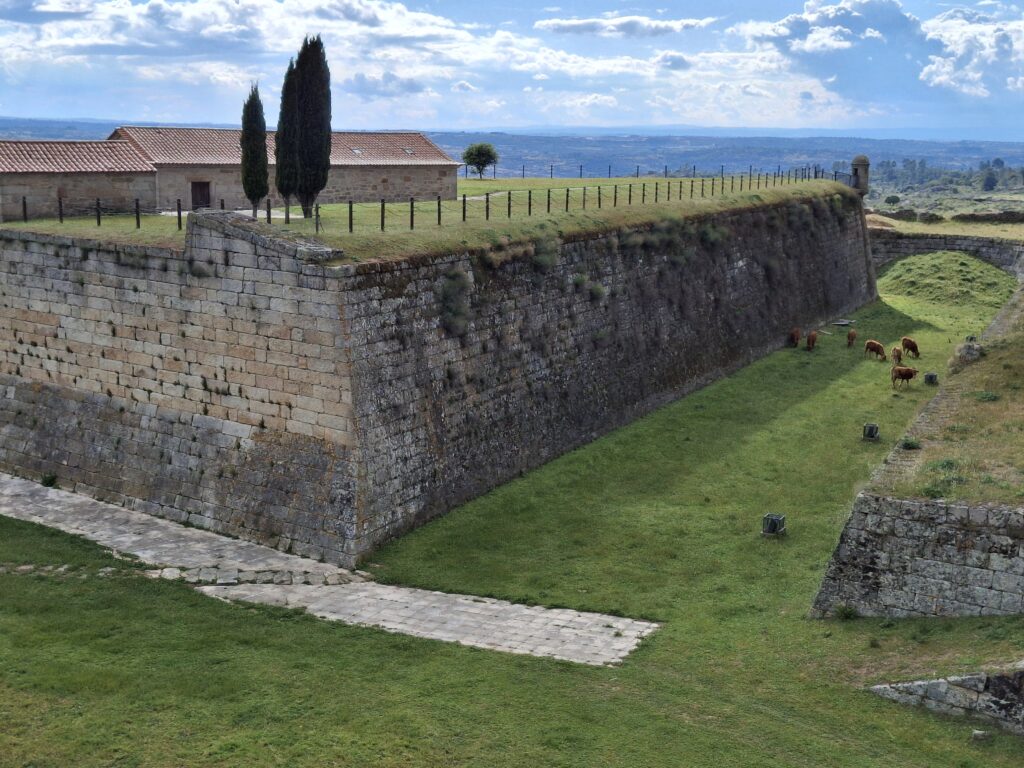
A wander around town to examine the fortifications, dinner, a long, hot bath and off to bed after an excellent day of cycling!

Leave a Reply